Sunday, January 8, 2023

My journey to becoming a Field Botanist

As a child I used to explore Cavendish Park (inside yellow circle) - a 12 hectare site located in the City of London, Ontario, Canada:


I would hide there to play hooky (truant) from school.  Convenient because it was down the street from my late grandmother's house on Cavendish Crescent.  Ironically, it became my place of employment from 1995 to 2003.  In 1995 I began teaching plant identification (ID) at Cavendish Park to volunteers and people receiving Employment Insurance (EI) benefits from the government.  At the time there weren't many resources available.  I scoured universities, libraries and book stores searching for field guides, technical manuals and papers on plant ID.  

In 2001 I led a research expedition to Nepal in search of medicinal plants, but forgot to bring the field guides I had purchased from my extensive search for plant ID resources.  I was forced to find another method to teach the 9 volunteers I had recruited.  A PhD trained Botanist from a university in Nepal accompanied us along with a team of Sherpa guides, our host and cooks as we traversed the foothills of the Himalayans between Kathmandu and the southern Terai region, Nepal.  

My thorough study and memorization of the content of my field guides paid off as I began teaching based on visual cues and characteristics.  While in Nepal I developed a course designed to identify to family level according to flower color, leaf arrangement, shape and number of petals.  This is how my Level 1 terrestrial and wetland plant course was born.

Meanwhile, from1999 and 2003 I led hikes with my students, employees and volunteers to survey all flora and fauna of the Bruce Trail between Tobermory and Owen Sound, Ontario, Canada.  I published the results in a field guide book in 2005 and called it "A Hiker's Guide to the Flora and Fauna of the Niagara Escarpment World Biosphere Reserve: Tobermory to Owen Sound":


By 2004 my plant courses gained popularity because I was helping people find jobs successfully in the environmental industry.  With encouragement from the government of Canada the EARTHQUEST Biological Field School came into fruition in June, 2005 when we opened our doors at Pinecroft, near Aylmer, Ontario, Canada:


For the next 5 years I taught out of a log cabin at Pinecroft.  We were free to explore the 22 ha property.  Thanks to the wonderful staff and owners at Pinecroft my field botany courses expanded into my Level 2 terrestrial and wetland plant course.


In the summer of 2008 - Rhonda Donley - a former student and co-author of the Ontario Management Plans for Special Concern Broad Beech Fern (Phegopteris hexagonoptera) and Green Dragon (Arisaema dracontium) obtained a job at Point Pelee National Park.  Subsequently, she invited my students and I to conduct Species at Risk (SAR) plant surveys on Middle Island, Lake Erie - one of the most southern points in Canada.  While conducting surveys on the island I got a call from a collegue and friend - Leigh Whyte to work on several wind farm projects in Orangeville, Ontario, Canada.  It was the launch of my career into environmental consulting and SAR plants.


My Level 3 SAR plants of Ontario plus Level 3 Asters and Goldenrods of Ontario emerged from my consulting work in Ontario to assist practioners with their work:


I have given a number of talks to local nature clubs and led hikes to demonstrate the concepts and principles of my plant field guide books.  Some of which have been mentioned in this blog:


As I look back at the path I took to learn how to ID vascular plants to the family, genus and species level and later teach to those interested in upgrading their skills I am grateful to have met and worked with so many individuals along the way.  Many of whom have gone on to their own successful careers.  Some also feel in love with plants.

Tuesday, September 4, 2018

Talk and Walk on Asters and Goldenrods of Ontario

Set your schedule to come and join author Dave Jolly as he delivers a presentation and hike on asters and goldenrods.

The talk is scheduled for 7:30 pm on Friday October 5, 2018 at the Knox Presbyterian Church at 55 Hincks Street in St. Thomas, Ontario, Canada.  The St. Thomas Field Naturalists.  Mr. Jolly will provide the key visual traits that distinguish the plants based on flower color, leaf shape, venation, flowerhead arrangement and habitat.  Some of Ontario's rarest asters and goldenrods will also be discussed.  Maps, photos of plants during all stages from spring, summer, fall and winter will sure to delight the avid aster and goldenrod enthusiast.

Available for purchase will be a photo field guide to the asters and goldenrods of Ontario.


The cost of this book is $35.00.  Proceeds will be donated to the St. Thomas Field Naturalists, Otter Valley Naturalists and the publication of an updated book on the Plants of Elgin county in honor of the late Bill Stewart (the original author of the first publication printed by the Catfish Creek Conservation Authority in 1969) and Dave's wife Jan Barnett-Jolly who passed away on August 16, 2018.  Jan always accompanied Dave on his sojourns to document the asters and goldenrods in Ontario.

The talk will be also be dedicated to Jan followed by a guided hike in her memory to Port Burwell Provincial Park in search of asters and goldenrods on Saturday October 6, 2018 at 10:00 am.  The rendezvous point for the hike will be at the Park administration office located at 9 Wilson Lane in Port Burwell, Ontario, Canada.

If you're interested in purchasing the book, or attending the talk and walk please contact Dave at EARTHQUEST.

Tel: 226-926-1470,
Email: earthquestcanada@yahoo.com

Monday, September 3, 2018

Field Botanists of Ontario hike to Port Burwell Provincial Park

On Sunday August 12 Dave Jolly led a Field Botanists of Ontario (FBO) hike through Port Burwell Provincial Park.  The hike started with an orientation and introduction to the Park, ecological studies performed to data, history and information about the Discovery Park by Park staff.  This was followed by a stroll through the Carolinian forest on Ravine Trail in search of examples of vascular plants recorded during the 2016 Ecological Land Classification (ELC) and vegetation survey work.

Photo: Dave Jolly

Plants observed included typical deciduous forest species such as Spotted St. Johnswort (Hypericum punctatum), Great Lobelia (Lobelia silphilatica), Agrimony (Agrimonia grypyosepela), Blue-stemmed x Canada Goldenrod (Solidago caesia x canadensis) and several sedge species - new to the Park such as Swan's Sedge (Carex swanii), Eastern Rough Sedge (Carex scabrata) and Slender Beakrush (Rhynchospora capillacea) were discovered courtesy of Will Van Hemessen and Rivka Schachak

Swan's Sedge inflorescence (Photo: Dave Jolly)


Venturing to the sand dune community the group marveled at the inconspicuous and easily overlooked emerging Hooker's Bugseed

Hooker's Bugseed (Photo: Dave Jolly)


A total of 26 new vascular plant species were added to the updated master plant list for the Park. This list of 464 taxa breaking down to 450 species (4 varieties, 5 hybrids and 5 sub-species).  Of these, the Park now boosts three Species at Risk (SAR), 5 provincially rare (i.e., species of conservation concern), 21 regionally rare (within the Carolinian forest region) and 30 locally rare (within Elgin county).  The official list was passed onto Park staff and the Discovery Program coordinator for Ontario Parks with the goal of publishing a pamphlet for Park patrons courtesy of EARTHQUEST (Canada) for the Environment.


Sunday, May 6, 2018

April 2018 plant hunt summary

Entering our 12th season collecting data for the master EARTHQUEST plant database with 112,000 records the first plant of the season was a Skunk Cabbage (Symplocarpus foetidus) recorded flowering on February 1st.

Skunk Cabbage

Photo: Dave Jolly


April was a long, cold, and lingering month for the flora of Ontario.  We had the coldest April since the master database began in 2006.  The spring was delayed by two weeks in most areas with only 33 species recorded across 16 counties and municipalities of Ontario.

With the addition of 4 new plants for Renfew county the amount of coverage for this municipality is slowly rising.

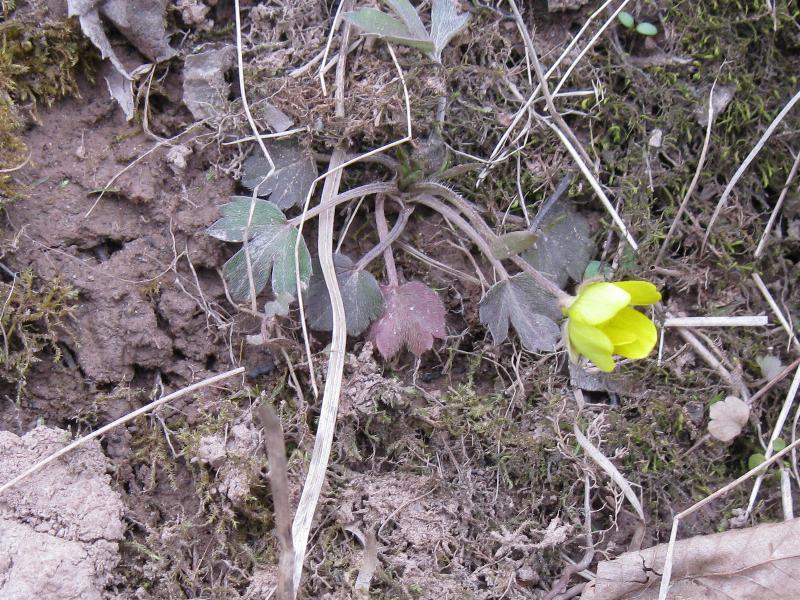
The rarest plant was Harbinger-of-Spring (Erigenia bulbosa) observed on April 22, 2018 in Elgin county - approximately 2.5 weeks behind the onset of the normal flowering period.  No insect pollinators were observed visiting this plant.

To view the April summary report please go to April plant summary.

Wednesday, January 10, 2018

Talk on Ontario's Orchids at Vienna Community Centre

Orchids are among the most beautiful and fragile flowers on the planet.  They range in size from the largest - the Queen of Orchids (Grammatophyllum speciosum) at a staggering 5.5 m in height to the smallest - measuring 0.5 mm, discovered in Brazil in 2015 - known as Campylocentrum insulare.  

Over 30,000 species exist in the world.

In Ontario there are over 50 species, most of these reside within the Bruce peninsula.  My personal favourite is Ram's-head Lady's-slipper (Cypripedium arientinum), which favours sandy sites among pines.

Photo: Dave Jolly


If you're interested in learning more about these fascinating plants plan on attending my talk for the Otter Valley Naturalists on Monday February 12, 2018 at 7:00 pm at the Vienna Community Centre in Vienna, Ontario.

Sunday, December 24, 2017

Ontario's threatened plant - Goldenseal - now has a recovery strategy

Over the past couple of years EARTHQUEST staff worked diligently with other plant species experts to write a recovery strategy for Ontario's population of threatened Goldenseal (Hydrastis canadensis).

                                                      Three year old plant                                                       Photo: Dave Jolly


Goldenseal is one of 72 vascular plant species listed on the Ontario Ministry of Natural Resources and Forestry (MNRF) Species at Risk in Ontario (SARO) site; https://www.ontario.ca/environment-and-energy/species-risk-ontario-list.  A recovery strategy is a provincial document that identifies the challenges facing species of plants and animals listed on the Ontario SARO list and provides recommendations for their recovery.

The MNRF recovery strategy for Goldenseal was published in May, 2016.  The document identified 24 naturally occurring populations with 79 colonies within the province of Ontario amounting to a total of 76,053 stems.  Two populations with 2 colonies were considered to be non-native in origin and, therefore, not protected under the Ontario Endangered Species Act and Ontario Regulation 242/08.  Two populations with 2 colonies were not assigned an Element Occurrence (EO) by the Natural Heritage Information Centre (NHIC) in Peterborough, Ontario, Canada.  The "element" is defined as an element of biodiversity.  This is the basic taxonomic unit on which NHIC compiles information: species (including subspecies, varieties and some hybrids), ecological communities, and wildlife concentration areas.

At least 2 out of 20 natural populations are threatened by illegal harvesting for their medicinal properties.

Details about the recovery strategy were also posted on the EARTHQUEST (Canada) for the Environment website.

Dave Jolly, the author of the provincial recovery strategy, was contacted by the author of the federal recovery strategy with Environment Canada in August, 2016.  Mr. Jolly was notified that 12 NHIC EO populations with at least 12 colonies were unaccounted for in the provincial recovery strategy.  All unaccounted EOs were historical records with 1 extant - last visited on June 10, 2010.  One population was in Essex region, 6 in Halton region, 3 in Huron county, 1 in Middlesex county, and 1 in Niagara region.

Beginning in August, 2016 Mr. Jolly endeavoured to conduct site visits to all EOs missed in the MNRF provincial recovery strategy.  On August 22, 2016 he visited the Niagara region site which yielded no results.  Subsequently, on May 13, June 28, and August 19, 2017 he visited 3 out of 6 sites in Halton region.  Talia Plaskett and Mr. Jolly visited another site in Halton region on September 23, 2017.  None of these historical sites confirmed Goldenseal.  Lastly, on October 14, 2017 Talia and Mr. Jolly visited the Middlesex county population and located 65 stems (17 plants).  One of these had a 3-leaved plant (i.e., at least 6 years old).  This confirmed this site as extant.  This data was shared with Environment Canada and will later go to the MNRF.

Talia Plaskett surveying Goldenseal population in Middlesex county
Photo: Dave Jolly


The remaining 7 historical populations of Goldenseal are planned to be visited in 2018.  It is hoped that future recovery strategy writers will contact Mr. Jolly to receive the most up-to-date information on these populations.

Monday, September 25, 2017

Talk at Norfolk Public Library & Chapters in London: Aster & Goldenrods of Ontario

Scheduled for Saturday October 28, 2017 from 1:30 pm to 3:00 pm at the Norfolk Public Library, 46 Colborne Street, Simcoe, Ontario, will be a talk and signing for our Asters and Goldenrods of Ontario book.  This will be a free event and open to the public.  Families with children welcome.

Another talk is scheduled for Sunday October 22, 2017 at the Chapters on Wellington Road South in London, Ontario.  The time will be from 12 N to 4 pm with book signing and a presentation on how to attract butterflies to your garden by planting asters and goldenrods.

Dave Jolly at Chapters Store in London, Ontario, Canada


The speaker will be Dave Jolly of EARTHQUEST (Canada) for the Environment and the EARTHQUEST Biological Field School.  Armed with 22 years of field experience and his B.Sc. degree from the University of Western Ontario Dave spent the last 13 years studying and photographing asters and goldenrods in their natural environment.  As a professional Ecologist he is considered a botanical expert on vascular plants and habitat restoration projects for insect pollinators and butterflies.  He has written several field guides on flora and fauna and was commissioned by the Ontario Ministry of Natural Resources and Forestry to write the recovery strategy for threatened Goldenseal.  To add to his botany porfolio on Ontario asters and goldenrods he has personally observed 53 taxa (5 hybrids, 1 variety) of these unique plants, including 5 Species at Risk, and 8 provincially rare.

In addition to Dave's contributions, a total of 252 plant records were recorded since April, 2006, collected by 26 students, volunteers, and staff from EARTHQUEST (Canada) for the Environment and the EARTHQUEST Biological Field School.

The Asters and Goldenrods of Ontario book showcases 34 species, 2 varieties, including 6 Ontario Species at Risk (SAR) based on visual cues.  It includes a binomial key for differentiating this confusing group according to flower colour, flowerhead arrangement, leaf width, venation and habitat characteristics.


The talks will cover topics in propagation for bee pollinator and restoration projects, how to select plants for butterfly gardens, as well as how to field identify plants as you walk through a woodland, forest, meadow, or wetland.

For those interested in purchasing a copy of our book the cost is $35 Canadian dollars plus shipping and handling.  Simply click on the Paypal link on the Asters and Goldenrods of Ontario book page, or contact us at: earthquestcanada@yahoo.com. Tel: 226-926-1470.

Tuesday, September 5, 2017

May 2017 plant hunt summary

A total of 2291 records were contributed by Dave Jolly and Brian Popelier for the month of May.

The beginning stretch of the Bruce Trail was hiked at Queenston Heights revealed 6 Butternut (Juglans cinerea) that have not been assessed.  These records will be shared with the Bruce Trail Conservancy and Niagara Region Conservation Authority.

Hiking along the Bruce Trail (McCormick Road Trail) near Dundas by Dave and Talia Plaskett also revealed 2 Butternuts needing assessment.

Nine new records were contributed to the database; Crawe's Sedge (Carex crawii), Inflated Narrow Leaved Sedge (Carex grisea), Northern Red Currant (Ribes rubrum), Peck's Sedge (Carex peckii), Pubescent Sedge (Carex hirtifolia), and Wood Witlow-grass contribtued by Brian and Muhlenberg's Sedge (Carex muhlenbergii var. muhlenbergii), Swamp Pin Oak (Quercus palustris), and Yellow Cordyalis (Cordyalis flavula) from Dave.

While leading bird hikes at Point Pelee National Park Dave discovered provincially rare Yellow Cordyalis in full bloom - a new record for the database.  This plant was first observed by Dave on Middle Island in June, 2008 when he was sent to survey rare plants, but it was not flowering at that time.

Photo: Dave Jolly

A total of 9 Species at Risk (SAR), and 17 species of special concern vascular plants were surveyed.  Four records of special concern Shumard Oak (Quercus shumardii) were observed flowering in Essex region between May 6th and 17th.

To view the monthly summary go to May, 2017 summary

Tuesday, May 2, 2017

April 2017 plant hunt summary

The month of April began with a couple of warm days, which brought an early spring with some trees and shrubs documented several weeks ahead of previous years.  Historically, April was one of the most biodiverse since 2010 with a total of 126 species recorded across 10 counties and municipalities.  This month's records were, however, surpassed by the all time record of 210 species set in 2012.

We would like to welcome back Talia Plaskett for the 2017 Field Botany Mentorship Program.  We were introduced to Talia in the April 2016 plant hunt summary article.  Talia shall be joining Senior Botanist Dave Jolly while surveying vascular plants along the Bruce Trail in the Hamilton and Dundas areas.  To date, Talia and Dave explored the Sulphur Springs Road section (managed by the Iroquois Bruce Trail club) of the Bruce Trail on April 29th.  This beautiful 5 km section wraps through undulating topography of rock and deciduous forest.  Together, Talia and Dave documented 21 flowering date records and applied Ecological Land Classification (ELC) methodology to classify the vegetation, soil, hydrology and geology into distinct vegetation units.

The rarest plant observed in the month of April was Harbinger of Spring (Erigenia bulbosa).  Interestingly, the first EARTHQUEST (Canada) for the Environment record of this species was documented by Mr. Brian Popelier, Land Stewardship Coordinator & Terrestrial Ecologist with the Bruce Trail Conservancy and a good friend of EARTHQUEST (Canada).  To add information to knowledge gaps on this species the population that Brian observed on April 9, 2010 in Elgin county has been inventoried every year since 2014.  Insect pollinators have been recorded since 2015 and include Tachnid flies (Tachnidae family) and Sweat bees (Halictidae family).  This population has remained relatively stable between 107 and 288 total stems.  The good news is that the number of seedlings has been steadily increasing with 19 found in 2017 surveys.

A significant contribution to the month of April was the completion of an ELC and vegetation survey for Port Burwell Provincial Park.  This project was initiated on May 14,2016 with assistance from the Otter Valley Naturalists and Park staff.  A total of 420 species of vascular plants, including 3 Ontario Species at Risk, 4 species of special concern (S1 - S3 ranked), 20 regionally rare within the Carolinian forest region, and 25 locally rare within Elgin county were recorded.  The report was submitted to Ontario Parks on April 30th.

View the summary for the April, 2017 plant hunt summary

Saturday, April 1, 2017

March 2017 Plant hunt summary

The spring started roughly two weeks ahead of normal flowering times with the earliest flowering date records for Silver Maple (Acer saccharinum) to date, documented on March 2nd.  Bouts of colder weather , however, have now delayed spring considerably.

Only a total of 11 species were recorded, falling short of the all time record set in March, 2012 with 80 species.

One new record was documented for Elgin county - Yellow Woodland Anemone (Anemone ranunculoides), which brought the total number of vascular plant species documented by EARTHQUEST staff, volunteers and students, for Elgin up to 803 taxa.

To view the monthly summary for March simply go to this link March 2017 summary

Help celebrate the 150th birthday of Canada by joining courses, ecotours, guided hikes, or workshops.  This ad will appear in the Rondeau Provincial Park 2017 Information Guide.


I am pleased to announce that Talia Plaskett has returned in 2017 to gain field botany skills through the Field Botany Mentorship Program.  I greatly look forward to working with her again as we explore the Bruce Trail, and some other EARTHQUEST projects cataloguing the unique flora of the region.

Thursday, July 7, 2016

May 2016 Plant hunt summary

The month of May, 2016  began  5 - 7 days behind 2015 for blooming periods, but caught up with the blooming periods of 2015 by mid May, 2016.  Floristic surveys for the month of May were varied and covered a total of 21 counties, or regional municipalities within the Mixed deciduous, Carolinian and Boreal forest regions of Ontario.

The surveys began with cataloguing vegetation during an Environmental Impact Study (EIS) within an 8 ha Significant Woodland (SW) in Niagara region on May 1st.  During this excursion the entire oak-hickory deciduous forest component of this SW was found to be full of provincially rare Red Hickory (Carya glabra), while the open woodland contained provincially and federally endangered Butternut (Juglans cinerea).

On May 14, 2016 EARTHQUEST launched the official kick-off for the update to the vascular plants of Port Burwell Provincial Park with the Otter Valley Naturalists (OVN).

Photo: Sara Lattanzio (from left to right; Dave Jolly, Joe Stephenson, Peter Staley, Ron Allensan and Tom Manley)


A total of 175 species of vascular plants were observed by Dave and other members of the OVN with several plant specimens of a western pine species - Douglas-fir (Pseudotsuga menziesii), pointed out by Ron, as the field trip highlight.  Thanks to Ron Douglas-fir was a new addition to the updated master plant species list.  Other new additions to the plant list include; Amur Maple (Acer ginnala), Chinese Bittersweet (Celastrus orbiculatus), regionally rare Azure Aster (Symphyotrichum oolentangiensis), Goatgrass (Aegilops ovata), Sassafras (Sassafras albidum), Sweet Cherry (Prunus avium), Northern Dewberry (Rubus flagellaris), and American Mountain-ash (Sorbus americana).  Also noted was a sapling Shagbark Hickory (Carya ovata), which are relatively rare within the Park boundaries.  This was an excellent way to kick off this project compared to the 185 plant species originally documented in mid September, 2001, which was cancelled due to the 911 event.  

For those that missed the May 14th kick-off for the plants of Port Burwell PP update - I'll be giving a talk at the Park on Friday July 15th at 4 pm, which is also .  Simple meet at the Recreation Field & Interpretive Center within the Park.  We'll be hiking the Ravine Creek trail in search of plants to contribute to the official master plant list for Port Burwell PP.  

On May 24th a field visit to another EARTHQUEST project between Sudbury and Manitoulin Island on behalf of Moggy Environmental revealed 8 new plant records for Manitoulin county, including tiny (plant depicted in the photo is approximately 8 cm) Creeping Snowberry (Gaultheria hispidus) - a new record for the Plants of Ontario database.

Photo:  Dave JollyCreeping Snowberry (Gaultheria hispidus) in bloom
Saturday May 28th covered 3.2 km along the Bruce Trail near Iroquois Heights Conservation Area (CA) on behalf of the Bruce Trail Conservancy (BTC).  Courtney Baldo, a volunteer Field Botany Mentorship participant assisted with this endeavour.  Courtney joined the mentorship program in April, 2016

Photo: Dave Jolly
Courtney taking notes along Bruce Trail near Iroquois Heights CA

A total of 20 families, 24 genera and 27 species were documented.  Canada Violet (Viola canadensis) was regionally rare.  Common Valerian (Valeriana officinalis) and Hair Fescue (Festuca filiformis) were new discoveries added to the Bruce Trail Project.  

Elsewhere along the Bruce Trail, or on BTC property Brian Popelier of the BTC surveyed 5 counties cataloguing 490 records.  Of these, Brian added 4 new records to the Plants of Ontario database; False Melic Grass (Schizachne purpurascens), Grooved Meadow Grass (Poa alsoides), Inflated Narrow Leaved Sedge (Carex grisea), and White Bear Sedge (Carex albursina).

In summary, 310 species were observed, including 4 provincially and federally listed Species at Risk, and 9 provincially rare plants.

To view all the plants discovered please visit the May monthly summary 

Monday, May 2, 2016

April, 2016 Plant hunt summary

We are delighted to announce that 3 young budding Volunteer Field Botanists have been selected for the Field Botany Mentorship program.  The program initiated on April 30th with a hike along the Bruce Trail in the scenic waterfall laced Dundas Valley to collect data for the Bruce Trail Conservancy.

Talia Plaskett. One of the Field Botanists of the Volunteer Field Botanist Mentorship Program
Photo: Talia Plaskett

The month of April experienced some unusually warm days, but most days were cool.  Subsequently, some plants received a good jump-start to the growing season, but the cooler days delayed other plants.  Overall, the plants blooming now are on schedule compared to the past ten years of data collection.  For example, White Trillium (Trillium grandiflorum) was first observed flowering on April 24th

A total of 77 species were observed among 7 counties and regional municipalities surveyed.  Highlights were 1 new record for the EARTHQUEST Plants of Ontario database - Fumewort (Corydalis solida) plus 3 new records for Halton region  -  provincially rare Bristly Buttercup (Ranunculus hispidus var. hispidus), Fumewort, and Bethlehem sage (Pulmonaria officinalis).

The most significant record belongs to Bristly Buttercup.  There are no Natural Heritage Information Centre (NHIC) Element Occurrence records for Halton region, so the EARTHQUEST record would be considered new for the NHIC.

Bristly Buttercup (R. hispidus var. hispidus)
Photo: Dave Jolly

Download your copy of the April, 2016 plant hunt summary.

Friday, April 1, 2016

March, 2016 Plant hunt summary

March marks the 10th year anniversary of our first flowering date record collected on March 26, 2006 for White Elm (Ulmus americana).  Over this time, over 55 surveyors have recorded plants across 15,451 ha of natural areas assessing 2524 Ecological Land Classification polygons on 36 environmental projects.  Since 2006 patterns in plant rarity have emerged with some interesting trends.  These will be highlighted at talk on "The State of Elgin County's Wild Plants in the 21st Century: Patterns and Trends in Rarity, Abundance and Distribution" for the Otter Valley Naturalists scheduled for May 9, 2016 at the Vienna Community Centre in Vienna, Ontario.

A few warmer days in March gave spring a jump start with some plants blooming a few weeks earlier than average.  Silver Maple (Acer saccharinum) began flowering on March 9.  This is consistent with the onset of blooming in 2012, which was one of the warmest springs recorded during our 10 year sojourn conducting plant surveys.  Cold spells, however, delayed flowering resulting in plants blooming during their normal periods.

An early record of regionally rare (R2 in the Carolinian forest region - source: EARTHQUEST Plants of Ontario database) American Hazel (Corylus americana) was observed on March 24, 2016 in Norfolk county.
Photo: Dave Jolly

The earliest record for this species was recorded on March 20, 2012.  Note the 3 lobed calyx - indicative of Corylus and Betula genera within the Birch/Betulaceae family.

A total of 19 species were recorded among 5 counties in southern Ontario.  This did not beat the March, 2012 total of 80 species, but did beat all other previous years.

To view the March plant hunt summary please visit our website;

http://www.earthquestcanada.ca/March2016summary.pdf

Sunday, March 20, 2016

Social Media Rules of Engagement

EARTHQUEST (Canada) for the Environment is an environmental organization established in 1997, specializing in botanical surveys, Species at Risk (SAR), Environmental Impact Studies and consultation for First Nations.  The EARTHQUEST Biological Field School was opened in 2004 as a private vocational institution that provides skill upgrades to professionals and individuals in the environmental industry.

This blog site, our Facebook and Twitter account are used to post activities, events, courses, programs and projects that we are involved with.  If you wish to leave a comment, or contribute to an article here are the rules of engagement for participating on these media platforms:

1.  Contributors are encouraged to post their comments, questions, thoughts and observations politely;

2.  We appreciate information regarding SAR flora, but please do not share them on this site.  We adhere to the data sensitivity policies of the Natural Heritage Information Centre (NHIC).  If you choose to submit your rare plant or SAR observations or records to the NHIC and/or EARTHQUEST please do submit them discretely in a confidential email;

3.  EARTHQUEST does post jobs, internships and volunteer-related opportunities, but does not endorse petitions.  The opinions and views expressed on these postings belong solely to those organizations or individuals posting them and do not reflect those of EARTHQUEST;

4.  Please exercise civil discourse when posting material.  Posts containing personal attacks, profanity, or any negative material will be removed and reported

Thursday, March 3, 2016

Mentorship for Young Budding Botanists

Now accepting new applications for 2024


We are delighted to announce a partnership with Fieldlife Environmental Consultants & Ecological Services to provide a unique mentorship opportunity.

Those selected will receive experience in vegetation ecology and Species at Risk surveys from a qualified professional and expert Botanist. Botanical work will be focused on vegetation surveys along the length of the Niagara Escarpment World Biosphere Reserve between Tobermory and Queenston Heights, Ontario. The project will culminate in the publication of a book on the flora. In memorandum of the late Ann Bard, who kindly donated her time, energy and services to staff and students of the EARTHQUEST Biological Field School by allowing us to use her Bed and Breakfast while hiking the Bruce Trail we would like to dedicate all proceeds from the sale of this book to be donated to the Bruce Trail Conservancy.  Please view this video in Ann's honour (If you have any trouble viewing this video please go to this link).

Survey methodology will consist of hiking the trail system with an expert Botanist and recording all plants found. Photographs of plants and their habitat from volunteers may be credited in the book. You could also be asked to contribute written sections to the book content. Hiking may take several hours to full 8 hour days traveling an average of 4 - 12 km per hike. Hikes are mainly organized on weekend dates, weather permitting.

Volunteers may also be selected to survey Species at Risk vegetation within a Provincial Park in the Port Burwell, Ontario area.  Volunteers selected for this project may be asked to undergo data sensitivity training. Other volunteer opportunities may involve assisting with guided hikes on behalf of Fieldlife Services.

Who is this Mentorship opportunity most suited for?

This position is open to all, but preference will be given to beginners who need the experience and mentorship. For those who do not have the botanical skills necessary to participate we highly recommend taking plant courses from the EARTHQUEST Biological Field School. Students and volunteers may take courses for discounted rates. Enrollment in an EARTHQUEST course is highly encouraged in order to participate in the work schedule.  Please visit our website for details:

http://www.earthquestcanada.ca/Plantcourses.htm
https://earthquestcanada.wixsite.com/plantcourses/field-botany-mentorship

Roles and Duties

The role and duties of this unique volunteer opportunity includes:

• Assisting staff with botanical surveys in search of Ontario Species at Risk;
• Learning intimately about vegetation ecology, survey protocols and methodology, native plant, Species at Risk and invasive plant identification and data collection. This includes plants which are notoriously difficult to identify such as asters, goldenrods, grasses, sedges and rushes;
• Contributing valuable data to a much needed and anticipated book for land management purposes, conservation and research

What is the benefit of becoming a Volunteer Botanist?

•Become more attractive to employers seeking candidates with skills in field botany, GIS and database management;
•Receive hands-on practical training and field experience in the environmental field within several disciplines – field Botany, GIS and database management;
•Gain professional connections and networking opportunities;
•Gain valuable insight and experience with the vegetation ecology of one of Ontario’s premier geological land formations;
•Get to know the Niagara Escarpment and meet new people;
•Learn GIS skills associated with how to map vegetation communities and populations;
•Learn about the environmental assessment process as it relates to conducting vegetation surveys in Ontario;
•Acquire skills associated with data collection and database management using MicroSoft software (i.e. Excel and Access)

Qualifications of candidates

•Comfortable working outdoors in all weather conditions;
•Enthusiastic with a sense of humor;
•Comfortable hiking and working in small groups;
•Able to work independently and as part of a team;
• A strong communicator with ability to take notes and photographs;
•A desire to learn and work with a mentor, taking a botany course if necessary;
• Reasonable with time management, judging hiking distances and aerial photo interpretation;
•Willing to spend time entering data into a database;
• Experience or interest in pursuing botany or a career in the environmental field;
• Experience working in the outdoors;
• Previous volunteer experience

Time Commitment

Volunteer work takes place primarily over weekend dates, not including statuatory holidays. Volunteer Botanists are asked to commit to volunteering a minimum of once per month from May – October, approximately 4 – 8 hours per hike. You will spend up to 2 – 4 hours per day entering data collected from field visits into the database. Alternatively, you may choose to spend up to 1 month entering data after program completion (i.e. November, 2023).  Volunteers who contribute the most vascular plant records will be awarded the Ann Bard Award at the close of their mentorship.

Application Procedure

We can only accept a limited number of volunteers for this mentorship opportunity. All applicants must complete the following steps to be considered for this unique program:

*Attend an interview with EARTHQUEST staff;
*Research the Niagara Escarpment and know the local topography, flora, time and distance required to hike between sites;
* Attend a field botany training session designed to help determine your botanical inventory rate

To be considered please submit a letter telling us why you wish to join this program, your qualifications, commitment to receiving mentorship and training from experienced professionals, desire to take plant courses along with your resume and three references.

Testimonials


To view comments from previous participants of this program please visit:

https://www.goabroad.com/providers/earthquest-canada-for-the-environment/programs/mentorship-in-field-botany-142506

Deadline to Apply


May 1, 2024

For further information about this program, please email us at earthquestcanada@yahoo.com

Tuesday, July 21, 2015

Rare plants of Turkey Point Field Botanists of Ontario field trip

Hot, humid weather did not deter 7 Field Botanists of Ontario (FBO) members from attending my field trip in search of rare plants of the Turkey Point area.  The trip started behind the Fish Hatchery to view planted specimens of provincially and federally threatened Kentucky coffee tree (Gymnocladus dioicus) and special concern Blue ash (Fraxinus quadrangulata).  We then ventured to an open sand barren community to look for provincially rare Spotted horsemint (Mondarda punctata) and Green milkweed (Asclepias viridiflora).  A new record for the Norfolk county list of the official EARTHQUEST Plants of Ontario database was Pinesap (Monotropa hypopithys), discovered by Burke Korol.

Pinesap (Monotropa hypopithys)
Photo: Dave Jolly

Provincially rare Bristly buttercup (Ranunculus hispidus var. hispidus) was observed along the trail path while attempting to find provincially rare Yellow bartonia (Bartonia virginica), but this plant was not located since it was too early in it's life stage to be viewed.

A search along 400 m of a hydro corridor revealed 5 Species at Risk and rare plants; provincially rare Whorled milkweed (Asclepias verticillata),

Whorled milkweed (Asclepias verticillata)
Photo: Dave Jolly

Moss phlox (Phlox subulata), Fern leaved yellow foxglove (Aureolaria pedicularia), endangered Virginia goat's-rue (Tephrosia virginiana) and Bird's-foot violet (Viola pedata).

FBO members (Sarah Mainguy; lower left, Burke Korol, Miles Hearn; center) and Tony Zammit; far right photographing SAR plants along hydro corridor
Photo: Dave Jolly

The third stop was along a sand road to observe provincially rare Dwarf chinquapin oak (Quercus prinoides), then transversing another sand barren for provincially rare Plain puccoon (Lithospermum caroliniensis) and Wild, or Sundial lupine (Lupinus perennis).  A hike through provincially rare Dry Black Oak - Pine Tallgrass Savannah Type (SVMM1-2) led to endangered Spotted wintergreen (Chimaphila maculata) adjacent to provincially rare Round leaved Tick-trefoil (Desmodium rotundifolia).

Round leaved Tick-trefoil (Desmodium rotundifolium)
Photo: Dave Jolly

Overall, the FBO field trip had a total of 13 SAR and rare plants within the Turkey Point area with the hydro corridor as the highlight.


Sunday, May 31, 2015

May, 2015 Plant hunt summary

With some warmer days nestled in between cooler days, the month of May was very productive with a total of 25 counties surveyed.  A total of 258 species were documented.  The record was 420 species set in May, 2012.  The most new records for a county were added for Manitoulin with 33 plant species.  Of these, the most significant was provincially rare Ram's-head Lady's-lipper (Cypripedium arietinum).  According to the Flora of Manitoulin Island (3rd) published by the University of Waterloo in 2000, this record is new for where it was found.

Ram's-head Lady's-lipper (Cypripedium arietinum
(Photo: Dave Jolly)

The month of May was very productive with a total of 25 counties surveyed.  The most new records for a county were added for Manitoulin with 38 plant species.  I was pleased to work with Mr. Darryl Boyes on Manitoulin Island, who was very helpful with documenting the flora.  Five new plant species; Berry exciting (Corydalis shimienensis), Few flowered spike rush (Eleocharis pauciflora), Hair-like sedge (Carex capillaris), London Plane-tree (Platanus hybrida) and Straight-styled wood sedge (Carex radiata) were added to the database.  Additionally, a new county was surveyed - Renfrew - in eastern Ontario.  

While surveying Grey county Painted trillium (Trillium undulatum) was added to Dave Jolly's Ontario master plant list.  Shown below is the trillium in the later stages of flowering.  At this stage, the petals are reduced to ribbons.

Painted trillium (Trillium undulatum
(Photo: Dave Jolly)

Collectively, Dave has documented 1694 flowering date records and observed 69 families, 168 genera, 263 species since April, 2015.

Mr. Brian Popelier contributed 30 records during the month of April for Hamilton, Halton and Grey counties. His record of Daphne (Daphne mezereum) was new for Grey county.

Dean Fitzgerald discovered a flowering American beech (Fagus grandifolia) in Parry Sound county on May 13th.  This is a new record for this county.

A field practicum in Mississauga for staff of ACER was conducted on May 25th yielding 8 families and 8 genera covered in the Level 1 & 2 FBT tree & shrub courses.

Staff from ACER Nimesha Basnayaka (center), Mike McMillan (right)
(Photo: Dave Jolly)

Thank you to all contributors for this month's records.

You may find the plant hunt summary results at; May summary

Friday, May 1, 2015

April, 2015 Plant hunt summary

An unusually cold winter contributed to a late spring with most flowers blooming at least 2 weeks behind normal schedule.  In 2013 provincially rare Harbinger of Spring (Erigenia bulbosa) began blooming on April 9th.  This year it bloomed on April 18th.  Moreover, this is the first time that I have observed  blooming on May 1st.  Surveys of this population of E. bulbosa exhibited a marked increase in the total number of plants by 2.5 x with 288 plants counted. Of these 198 were 2 leaved plants and 2 were seedlings.  No seedlings were found in 2014.

A field training course at Cawthra Woods, Mississauga, Ontario for the Association for Canadian Education Resources/Climate's Sake (ACER) staff contributed three new flowering date records for Peel region - all of which were cultivated or introduced species; Siberian squill (Scilla siberica), Croccus (Croccus longiflorus) and Grape hyacinth (Muscari botyroides).  We also discovered a new record for Witch hazel (Hamamelis virginiana) and European spindletree (Euonymus europaea), but these shrubs were not flowering.  I would like to thank ACER for hosting a great day with their staff.

Staff from ACER at Tree & Shrub field training course at Cawthra Woods, Mississauga, Ontario (Photo: Dave Jolly)


A total of 18 counties were inventoried during the month of April; Brant, Cochrane, Elgin, Grey, Halton, Hamilton, Middlesex, Muskoka, Norfolk, Oxford, Peel, Simcoe, Sudbury, Toronto, Nippissing, Temiskaming, Waterloo and York.  New records for Sudbury county included Large toothed aspen (Populus grandidentata) and Silver maple (Acer saccharinum).  These were also new species added for Nippissing county, while Large toothed aspen was new for Cochrane county and Speckled alder (Alnus incana) was new for Temiskaming county.  Two hundred and eighty records were tallied with a 51 species recorded.  The highest number of species recorded in the month of April was set in 2012 with 210 species.  

I would like to thank Yves Scholten for contributing a record for Sharp-lobed hepatica (Anemone acutiloba) in Halton region on April 12th and Dean Fitzgerald for contributing a new record for Waterloo region of Bethlehem sage (Pulmonaria officinalis) on April 30th.

We are pleased to ccongratulate Kim McCormack, who took our Level 1 & 2 FBT terrestrial plant + Level 3 Asters and Goldenrods of Ontario courses in 2013, for getting a job with Credit Valley Conservation as their Natural Areas Inventory Assistant!  Kim will be continuing to expand and sharpen her vascular plant field ID skills as one of my apprentices by accompanying me on EARTHQUEST projects and performing plant surveys.  If you wish to assist with these  endeavours to contribute to worthwhile projects simply contact me at; earthquestcanadaATyahoo.com.  The projects we're targeting in 2015 are;

1.  Bruce Trail Project; hiking along the trail (white blazed) from Dundas to Burlington for the Bruce Trail Conservancy (volunteer)
2.  Ruthven National Historic Site vegetation surveys around their mist nets to assess which fruits the birds are eating during migration (volunteer)
3.  Field Botanists of Ontario (FBO) field trip in search of SAR and rare plants of Turkey Point ($20 participation fee which goes to the FBO - volunteer)
4.  Various site visits to natural areas in Ontario to contribute to the master EARTHQUEST Plants of Ontario database (volunteer)

As a correction to the April summary Brian Popelier was kind enough to submit 30 additional records for Grey & Hamilton county as well as Halton region.  His discovery of Daphne (Daphne mezereum) is a new record for Grey county!

To view the revised 2015 April summary please download here

Monday, October 6, 2014

Field trip to Black Oak Heritage Park, Windsor, Ontario

On September 6th, 2014 I participated in an annual field trip led by the Field Botanists of Ontario.  The trip was well attended and demonstrated some of the unique Black Oak savannah habitat found in the Windsor area.  A couple of rare plants were added to the official EARTHQUEST Plants of Ontario database such as provincially rare Tall Thoroughwort (Eupatorium altissimum).

Tall Thoroughwort
Photo: Dave Jolly

Special concern Shumard Oak (Quercus shumardii) was a new tree species for this section of the Park.  This contributes to the 500+ trees recorded for Essex county.  In fact, this oak species is one of the most dominant trees in Essex county within woodlots anywhere on the Clay plain in this region.  All other Shumard Oak reside primarily within Essex and Lambton counties extending eastward to Chatham-Kent.  Of the 10 sites were visited between June 18 and September 2, 2014 only these regional municipalities had Shumard Oak.  Previous Committee on the Status of Endangered Wildlife in Canada (COSEWIC) reports suggested that the range of this species reaches Niagara region, but these records have are now regarded as suspected hybrids based on visual identification traits; acorns, leaf buds, leaf shape, tomentum (tufts of hairs located on the leaf underside between the mid-rib and veins), etc.  To date, none of the Niagara region trees examined have been confirmed as 100% pure Shumard Oak.  Instead, they are likely hybrids between Red Oak (Quercus rubra) and Swamp Pin Oak (Quercus palustris) since both species were present at the sites investigated.  The resulting hybrid is Q. rubra x Q. palustris if it exhibits more Red Oak traits and Q. palustris x Q. rubra if it exhibits more Swamp Pin Oak traits.  Genetic studies would ultimately clear up any misconceptions about the true distribution of Shumard Oak in Canada.

New to the database was Swamp Lousewort (Pedicularis lanceolata), which was adjacent to a large patch of Colicroot (Aletris farinosa).  With the high biodiversity of  Tallgrass prairie mixed with Black Oak savannah species.  The most exciting discovery was a new record for Essex county of endangered Spotted Wintergreen (Chimaphila maculata) to add to the Ontario Recovery Strategy series.

Spotted Wintergreen
Photo: Dave Jolly


Thursday, May 1, 2014

April, 2014 Plant hunt summary

A record cold winter has resulted in a late spring with most flowering plants blooming 2 - 3 weeks behind schedule.  With only 41 species observed in April we matched the last late spring with 43 species recorded in 2007.  That means floristically, southern Ontario hasn't experienced such a cool and late spring in 7 years.  Trilliums (Trillium spp.) are only just beginning to bloom, when in normal years, they would be in full bloom by now - i.e., May 1st.  The only flowering plant observed that didn't seem to be affected by the late spring was the ephimeral Harbinger of spring (Erigenia bulbosa).

Harbinger of spring (Erigenia bulbosa)
Photo: Brian Popelier

Rare plant surveys began with provincially rare Harbinger of spring (ranked S3 in Ontario by the Natural Heritage Information Centre) on April 13th with a total of 116 plants counted in Elgin county.  An age structure analysis revealed 44 two-leaved plants, which are more mature and tend to produce 2 or more flowering stalks.  This population will be revisited later this month to count the total number of flowers that have gone to seed and if any new, younger plants have emerged.  A number of rare plant surveys will be carried out this year within the Grand River watershed on behalf of the Grand River Conservation Authority.

A total of 221 plants were observed in April across 6 counties, Brant, Elgin, Haldimand, Hamilton, Oxford and Norfolk.  All 403 Elgin county records were donated to the Otter Valley Naturalists (OVN) for their Elgin County Natural Heritage Inventory (NAI), which is hosted by Carolinian Canada Coalition.  A master plant species list of all plants observed in Elgin county since the inception of the EARTHQUEST Plants of Ontario database in 2006 was donated to OVN for the Elgin county NAI.  This amounted to 17,022 records; 127 families, 417 genera, 758 species, or taxa (7 varieties, 7 hybrids); 104 regionally rare (Ecoregion 7E), 102 locally rare (Elgin county), 22 provincially rare, 9 Species at Risk (provincial & federal).  The OVN will use the EARTHQUEST master plant list of Elgin county to build the official list for the NAI.

New records for the county of Oxford in April, 2014 were Cutleaf toothwort (Dentaria concatenata), Giant blue cohosh (Caulophyllum giganteum) and Plantain leaved sedge (Carex plantaginea).

To view the April, 2014 monthly summary report please go to; http://earthquestcanada.ca/April2014summary.pdf